What Is a Will?
A Will, or testament, is a legal document that describes how you would like your self-acquired property, your partitioned share in ancestral property, and other assets to be distributed after your death.
A Will helps ensure that the property passes to the chosen beneficiaries according to the wishes of the testator, rather than being distributed solely through the rules applicable to intestate succession.
Who Can Execute a Will?
As per Section 59 of the Indian Succession Act, 1925, every person of sound mind who is not a minor may dispose of their property by Will.
The testator should understand the nature and effect of the Will and the dispositions being made through it.
What Is Will Probate?
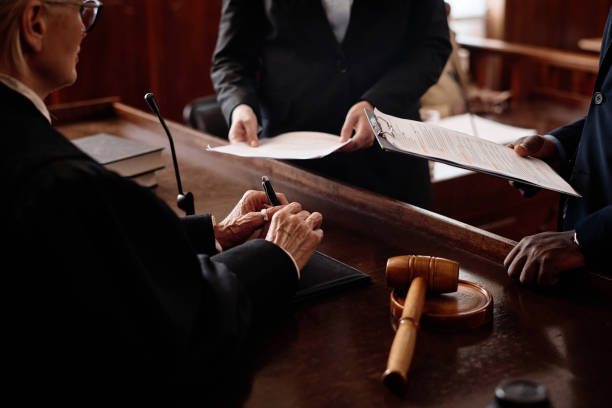
Probate of a Will is the legal process of proving a deceased person’s Will in court and obtaining judicial recognition of the Will as the authentic testamentary document.
Probate proceedings may involve examination of the Will, its execution, attestation and the evidence of the attesting witnesses, particularly where the Will is disputed.
Role of an Attesting Witness of a Will
An attesting witness plays a crucial role in proving a Will, particularly when the Will is disputed or its execution is required to be proved before a court.
The evidence of an attesting witness may establish the circumstances in which the Will was executed and attested.
What the Witness Has to Say
The attesting witness may depose regarding the following facts:
1. Status and Competence of the Witness
That he/she is one of the attesting witnesses of the Will and is of sound mind, competent, and capable of giving evidence in the present matter.
2. Relationship with the Testator
That the deceased testator was known to me and what was the relationship between the testator and the witness.
3. Execution of the Will
That the deceased testator had got drafted a Will with the intent of bequeathing his estate and had signed his last Will and affixed his thumb impression on all pages of the Will.
4. Sound and Disposing State of Mind
That the deceased testator had signed his last Will in an absolutely sound and disposing state of mind, being in perfect health, having sound memory and understanding, without any fear, threat, pressure, coercion and acting on his own free will, being fully aware of the contents as well as the consequences, nature and effect of the dispositions in the Will.
The testator acted independently and voluntarily in making the dispositions contained in the Will.
5. Attestation by Witnesses
That I and the other attesting witness had signed the said Will on the specific directions of the testator as he had absolute trust and faith.
That the testator and both the attesting witnesses had signed the said testament and affixed our thumb impressions simultaneously in the presence of each other.
6. Registration of the Will
That we appeared before the Sub-Registrar who verified the authenticity of the Will and made appropriate inquiries regarding its genuineness.
The Sub-Registrar had explained the contents of the said Will to the testator and the testator admitted the same to be correct and thereafter voluntarily executed the registration of the Will. The Sub-Registrar had made a noting of the same on the Will.
7. Identification of Signatures
I hereby identify the signatures of the testator and my signatures on the said Will.
8. Language of the Will
That the Will was executed in the English language, which was well understood by the testator, and no translation was required.
9. Understanding of the Will and Its Legal Effect
That the testator fully understood that he was executing his last Will and Testament and that the document would govern the distribution of his property after his demise.
He was aware of the revocable nature of the Will and the legal implications of the dispositions made therein.
What Laws Govern Proving a Will?
Indian Succession Act, 1925: Section 63
Under Section 63 of the Indian Succession Act, 1925, an unprivileged Will must be executed in accordance with the prescribed requirements, including:
- The Will must be signed or marked by the testator.
- The Will must be attested by at least two witnesses.
Bharatiya Sakshya Adhiniyam, 2023: Proof of Execution
The law relating to proof of execution of documents, including Wills, is now governed by the Bharatiya Sakshya Adhiniyam, 2023 (BSA), which replaced the Indian Evidence Act, 1872.
The applicable provision requires the prescribed mode of proof of execution of documents required by law to be attested, including examination of an attesting witness where required.
Will Drafting, Registration & Probate in Gurgaon
A properly drafted Will can help clearly record the testator’s wishes regarding the distribution of property and other assets after death.
For assistance relating to Will drafting, Will registration, attesting witnesses, execution of Wills, probate proceedings, contested Wills and succession matters, consult Adv. Keshav Mehra Advocate in Gurgaon experienced in succession and testamentary matters.