


What Is a Will (Vasiyat)? | Will Drafting, Registration & Probate Lawyer in Gurgaon

What Is a Will? A Will, or testament, is a legal document that describes how you would like your self-acquired property, your partitioned share in ancestral property, and other assets to be distributed after your death. A Will helps ensure that the property passes to the chosen beneficiaries according to the wishes of the testator, […]
Right to a Speedy Trial in Criminal Cases | Article 21

Basic Law: Right to a Speedy Trial One-Line Principle An accused person has a constitutional right to have criminal proceedings concluded within a reasonable time. Simple Explanation A criminal case should not be kept pending indefinitely. Unreasonable delay can affect both the accused and the administration of justice. The right to a speedy trial is […]
Right to Bail in Criminal Cases | Bailable & Non-Bailable Offences

Basic Law: Right to Bail One-Line Principle Bail is generally the rule; jail is an exception, subject to the nature of the offence and the applicable law. Simple Explanation When a person is accused of an offence, being accused does not by itself mean that the person must remain in custody throughout the case. Depending […]
Right to Receive a Copy of the Arrest Memo

Basic Law: Right to Receive a Copy of the Arrest Memo One-Line Principle An arrested person is entitled to important information and documentation concerning the arrest, including an arrest memo prepared according to law. Simple Explanation An arrest should not be an undocumented exercise of police power. The law requires the arrest and related safeguards […]
Supreme Court Dissolves Marriage & Quashes Pending Cases Under Article 142 | Matrimonial Law

SUPREME COURT OF INDIA | LANDMARK JUDGMENT Supreme Court Ends Matrimonial Dispute & Quashes Pending Cases Using Article 142 Main Judgment The Supreme Court dissolved the marriage between the parties by mutual consent under Article 142 of the Constitution of India, after finding that the marriage had reached a dead end and there was no […]
Supreme Court: Doubts About Lender’s Financial Capacity Cannot Automatically Defeat a Cheque Bounce Case | Section 138 NI Act

SUPREME COURT OF INDIA | LANDMARK JUDGMENT Supreme Court: Mere Doubts About a Lender’s Financial Capacity Cannot Defeat a Cheque Bounce Case Main Judgment The Supreme Court allowed the complainant’s appeal and restored the accused’s conviction under Section 138 of the Negotiable Instruments Act, 1881. The Court held that once the cheque signature is admitted, […]
Supreme Court on POCSO Allegations in Matrimonial & Child-Custody Disputes | Landmark Judgment 2026

SUPREME COURT | LANDMARK JUDGMENT Supreme Court Lays Down Safeguards in POCSO Cases Arising During Matrimonial & Child-Custody Disputes Main Judgment In ‘R’ v. ‘E’ & Anr., 2026 INSC 1049, the Supreme Court quashed the POCSO FIR against the father and his family, holding that continuation of the proceedings, on the material before the Court, […]
Right to Cross-Examine a Witness in Criminal Trials
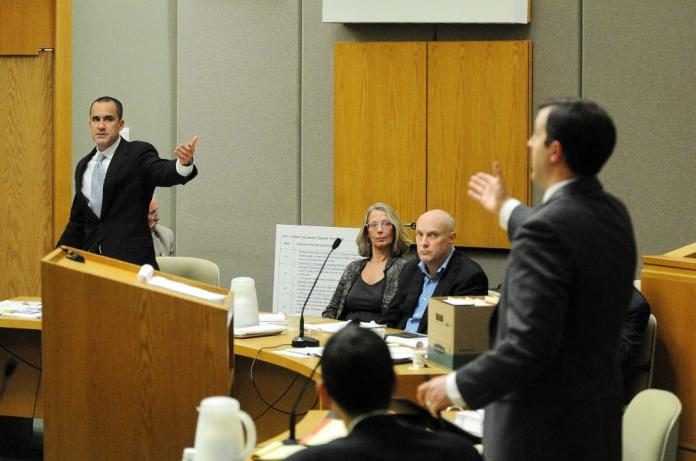
Basic Law: Right to Cross-Examine a Witness One-Line Principle In a criminal trial, the accused ordinarily has the right to challenge prosecution evidence through cross-examination. Simple Explanation When a witness gives evidence against the accused, the defence generally gets an opportunity to question that witness. Cross-examination helps the court test the witness’s truthfulness, accuracy, memory, […]
Right to Be Produced Before a Magistrate Within 24 Hours

Basic Law: Right to Be Produced Before a Magistrate One-Line Principle A person arrested by the police must generally be produced before the nearest Magistrate within 24 hours, excluding the time necessary for the journey. Simple Explanation The police cannot ordinarily keep an arrested person in custody indefinitely without judicial oversight. The law requires the […]
Right Against Arbitrary Arrest | Criminal Law & BNSS

Basic Law: Right Against Arbitrary Arrest One-Line Principle Police cannot arrest a person arbitrarily; an arrest must have a lawful basis and comply with the safeguards prescribed by law. Simple Explanation The power to arrest is not unlimited. Depending on the circumstances and the offence, the police must satisfy the statutory requirements for arrest and […]